Regardless of what business you’re in–whether you write and sell insurance or novels–customers are only going to buy you and your product if you earn their loyalty. No one is automatically entitled to trust.
How can you earn trust and loyalty?
Be authentic and sincere. If you’re a vegan selling Angus beef, that fundamental contradiction is apparent–if only in a funny feeling prospective customers sense.
Be open and honest. The popular word these days is “transparent.” And it’s appropriate. You don’t want people to lie to you, be deceptive, or withhold important information. So, don’t lie to, deceive, or withhold from others. The imbalance of treating people in a way you won’t tolerate being treated is going to topple you eventually.
Understand people. Do you know how your customers communicate? Would they prefer a phone call, a text, or an email? What do they believe? What do they want? What do they NEED? What do they consider important? If you don’t know the answers to these questions, how can you possibly give them what they want and need … or what they value?
The most important things to remember about people are that they want you to:
View them as important
Care about them
Listen to them
I talk about this subject in more detail in episode 14 of my podcast, Taking the Mystery out of Insurance. You can find it here.
If you’d like to read more about the subject, check out Dale Carnegie’s book, How to Win Friends and Influence People or any of Jeffrey Gitomer’s sales books (gitomer.com).
This week, I ventured down a slightly different path on my podcast. I talked about COVID and insurance, but more about what I believe we need to consider for the future rather than about what is happening today.
In America, we either brag about our independence or gripe because we feel we’re losing it. In reality, we don’t have it, never had it, and never will have it.
What is Independence?
You might think I’m full of baloney, but I’m not. Just read the dictionary. When you’re independent, you’re free from the control of others. You don’t rely on other people for help and assistance. You are truly autonomous.
If we’re going to bandy about terminology, we need to understand the vocabulary we use.
We can’t live independently without the assistance, advice, and assent of others unless we march into the wilderness and set up home off the grid. Otherwise, we live in a community, which means we mutually depend upon each other for support and aid.
Regardless of where we live–off the grid or in the community–we all have the ability to choose a level of autonomy, a state of being where we strive to achieve independence to whatever degree we can while also living within the community.
Problem is, independence is costly in terms of time, effort, and humanity.
What Does Independence Look Like?
When we’re truly independent, we don’t adopt the opinions of others, we form our own. We listen to as many other perspectives as we can, weigh the variety of the input, and reach our own decisions. When we only seek out the voices of those who echo our own, we’re handicapping ourselves and leaving ourselves vulnerable to those who do not believe in independence.
This world contains people who exploit the fact that few of us will ever achieve true independence. They seek to control us to achieve what they view as their own independence. Clearly, they haven’t read the dictionary, either.
Throughout this pandemic, some of us have drawn closer to our community to work together to overcome the challenges to our health, financial survival, and emotional well-being. Others of us have chosen to withdraw from the community and strike out on our own, literally striking out in harmful ways. Harmful to ourselves, to others, to our community.
We all talk about our rights and how the government grants us our rights. Well, if we were truly independent, no one would give us anything. We’d obtain what we wanted for ourselves. Truth is, we were more independent thousands of years ago than we are today. The way people are behaving these days, our society will achieve total autonomy and, instead of advancing, regress. It’s already started that downside.
How Independence and Community Intersect
The very reason we formed society (aka community) was to improve the quality of our lives. The concept of community relies upon sharing, variety, and cooperation. Let me share an analogy.
A small, six-inch long critter found its way into my yard last week. He ventured from his own community into mine, without conducting any research. When my eighty-pound dog discovered the interloper, Angus thought he was friendly and wanted to play. As you can imagine, the critter was terrified. I chased Angus into the house and examined the little guy.
I thought the critter was a baby muskrat. (We live within 100 feet of a brook that connects two large ponds.) I snapped a photo of him and texted it to my brother, who immediately pointed out all the reasons why the little guy was a dark brown field mouse and not a muskrat. Or a rat. Or a beaver. Or any other type of rodent I thought he might be.
I investigated the interloper before making any type of decision about his future other than to save him from becoming my dog’s chew toy. I also walked the yard to see if he was the scout for a band of fellow interlopers. I didn’t rush to judgment. I didn’t run off in fear. I didn’t start screaming.
I conducted my research and relied on my brother, an outdoorsman and hunter, to provide me with information and knowledge I clearly lacked. And then I acted.
How Do You View Independence and Community?
How would you have acted? Not if you were in my shoes and had just reviewed your brother’s information, but the moment you found your dog playing with the creature?
I suspect that the way any of us would have reacted in this situation is the same way we react when dealing with other people. Although we crave independence and control over our own lives, some of us do not hesitate to control others and take away their independence–oftentimes by jumping to conclusions and not conducting any research. Would you have let Angus continue playing with (aka tormenting) the mouse? Would you have chased Angus away and then killed the thing yourself? Would you have let him go? Would you have conducted any research in that moment? Or would you have done something else? Some of us realize there are always more options than we alone can see?
What did you do on Independence Day? Did you gripe about the lack of public fireworks’ displays and the inability to attend a large community barbecue? Or did you sit in your own back yard with a few people you love and celebrate your own personal independence … and/or community?
The homeowners policy insures personal risks, not business risks, when you’re working from home. For this reason, the homeowners policy explicitly excludes virtually all coverage for business property and liability.
Property & Liability Coverage Limits
The homeowners policy includes very limited personal property coverage. The limit usually ranges between $1,000 and $2,500 if the business property is at your house. The limit is much less for business property anywhere else–like in your car.
The policy severely limits liability coverage for business activities, as well. It only applies to incidents that occur on your property at home, and only for those that arise when:
You rent your house–either occasionally as a residence or partially to 1 or 2 boarders. This does NOT include Airbnb rentals, or any series of rentals. Neither does it include renting your barn to a neighbor who does lawn mower repairs.
You rent a portion of your house or other building for use as a private garage, office, school, or studio. Think designating a room for use to give music or dance lessons, or as an office for a writer.
An insured who is under age 21 runs a self-employed part-time or occasional business that does not have any employees.
Problems with These Coverage Limits When Working from Home
What does all this mean? When a person works from home, any property used for business receives very limited coverage. Regardless of whether it is owned by the individual or the individual’s employer. If the employer insures its owned property, that property should be insured specifically on the employer’s policy. A notation should be included that indicates it is located at the employee’s home. In some cases, the employer’s failure to cite the location of the property on its policy might result in a lack of adequate coverage in the event of a loss. This is especially true if the property is valued at more than $5,000 or $10,000,
Potential problems relating to the lack of business liability coverage under the homeowners policy are more serious. In most cases, clients do not visit employees working from home. But if anyone visits your home for business purposes and gets hurt, your unendorsed homeowners policy does not provide liability coverage. Similarly, if a FedEx or USPS employee trips and falls while delivering business mail or packages, any claim for injuries are not covered. Basically, coverage for ANY other type of liability (think cyber liability, products liability, etc.) is NOT covered, either.
Ways to Resolve the Problems
Endorsements are available to add limited business property and liability coverage to the homeowners policy. Unfortunately, in most cases, it’s probably not adequate. Some insurers also offer a home business endorsement that does include business, or commercial, coverage. That’s probably a better idea.
Remember, even if you’re working from home and your employer does have property and liability coverage in place, your employer gets the broadest coverage under that policy. If your employer insures you under his policy, you can still be held personally liable for property damage and bodily injury resulting from business activities conducted at your home.
Unless you buy and add business endorsements to your homeowners policy, you might find yourself uninsured in the event of a loss when you’re working from home.
For more details, listen to this week’s podcast at Taking the Mystery out of Insurance.
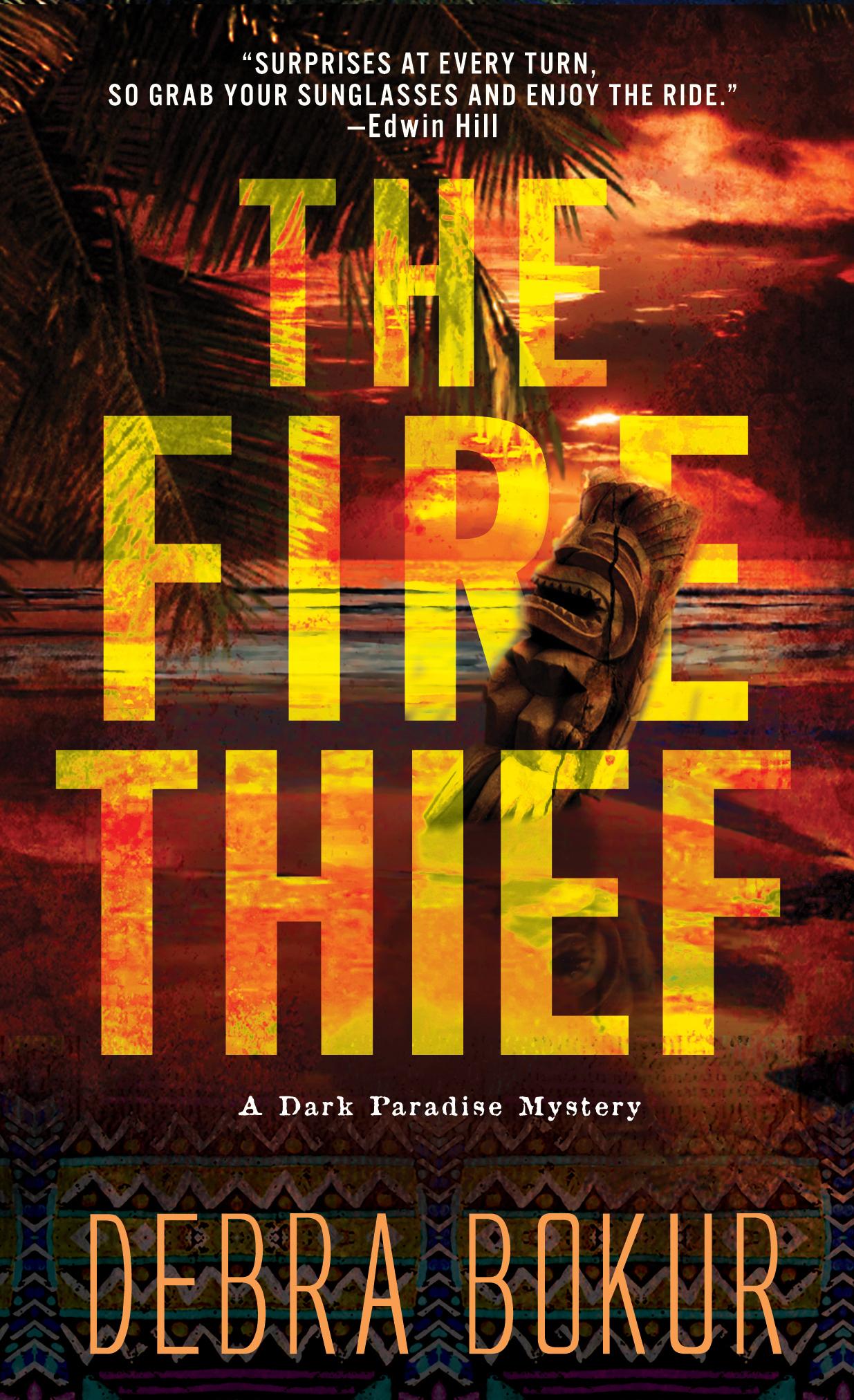
The first book in Debra Bokur’s mystery series, The Fire Thief, was released last month to rave reviews. The series is set in Hawaii and you can check it out on her website at https://www.debrabokur.com/.
Debra visited with me on The Writer’s Voice this week, and we talked about how her career as a celebrated journalist and editor of magazines and literary journals did NOT prepare her for writing and publishing fiction. You can listen to the podcast episode here. A short video excerpt will appear on my YouTube channel on Friday, here.
As most writers will agree, we tend to write long or short. When you’re a journalist, as Debra is, you tend to write to specific word counts required by the outlet publishing your work, such as 1,000 per piece. When you write fiction, you tend to write thousands and thousands of words … only to find you need to slash your word count by as much as 25%.
My experiences have been different from Debra’s. I found that writing a newspaper column and magazine articles actually helped me keep my fiction writing tight and in accordance with required word counts. Then again, I began writing fiction first and found it fairly easy to cut word count. Not every writer can toss away words with relish.
But when you begin writing short nonfiction it’s much more difficult to retrain yourself. Give Debra’s interview a listen and then share YOUR take on how writing one particular type of work did or did not prepare you for tackling another type.